Showing posts with label Six Things. Show all posts

Sunday, March 9, 2014

The Six Things of Regulator Maintenance

Recently my repair area has been really busy. Good divers want to make sure their gear is well maintained and working well when you need it. The number one piece of equipment divers want to keep well maintained is your regulator for obvious life support reasons. It amazes me that from time to time I will get a regulator in that hasn’t been serviced in years yet the diver has been diving with it right along. The “if it’s not broke, don’t fix it” idea just doesn’t fit with regulators.  Even if it hasn’t been used for a couple of years your regulator should be serviced as o-rings, seats and poppets can dry out and fail when you’re diving. Not the surprise that I want at 60 ft. So her it goes:

Six things you need to know about regulator maintenance.

Number 1
Have your regulator inspected every other year and rebuilt in the years between inspection years. This is the schedule recommended by most regulator manufacturers. If a regulator if in a high use situation it’s recommended that the regulator is serviced more frequently. There are exceptions such as the Atomic T3 regulator, which requires rebuilding every 3 years or 300 dives. When your regulator is serviced make sure that the tech uses only manufacturers parts kits AND that they change all the hose O-rings as well.


Number 2
Manufacturers don’t require that the tech replace the exhaust vales as part of the  rebuild of the second stage and octo. It’s recommended that the tech inspect them and replace them only if they show signs of wear or they are leaking. I replace them every time I rebuild, since as with O-rings, they are made of silicone or rubber and dry out with time.

Number 3
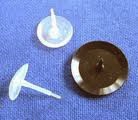
Although the manufacturers mostly call for the second stage diaphragm to be replaced only when they are torn or deformed, I replace the diaphragm on every third rebuild. Again, like the O-rings and the exhaust valve it’s made of silicone rubber and can dry out and fail. They cost about $12 and I don’t charge anything to install. That’s $2 a year for peace of mind.


Number 4
More and more of our divers are using comfort swivels on their second stages and HP Quick disconnects for their computers. Both of these upgrades have O-rings and need to be serviced at the same time as your regulator. It shortens your dive if there is steady stream of bubbles coming from your swivel or QD.


Number 5
What’s an HP air-spool and why should you be concerned about it?  An air spool is a tiny pin between your High Pressure gauge and your HP hose. It has two little O-rings that seal the connection. It’s not typically part of the regulator rebuild or the rebuild kit I change them N/C with every rebuild. It adds security that you won’t have a blow out and have to miss a dive.


Number 6
Even if you haven’t done a lot of dives during the year you should change the battery in your computer at least once a year. Every year and absolutely before a dive trip. The cost before the trip is less than having to rent a computer during the trip.

These are the six things to think about on servicing your regulator. If there was a seventh, I would say don’t wait until the week before your trip or the beginning of the season to get your regulator in shape.


Mike (mook)

Sunday, February 2, 2014

The Six Highlights of the 2014 Trip to Curacao

As many of you know, Team Manta recently returned from Curacao, an island just north of Venezuela. Here are 6 highlights, in no particular order, of this trip.

Number One: The Diving
Duh, that was the point of the trip, but what I liked about the diving this time is that most of the dives were relatively shallow.  This positively affected the dives in different ways. With the sky’s overcast many of the days, the sun obviously did not penetrate the water as deeply as it does on clear days. Staying shallow allowed us to better see the corals and their true colors. Every diver knows that shallower dives mean longer dives. Even for divers with less than optimal air consumption rates were able to squeeze an hour out of most of the dives. Finally, our newer divers were neither a limiting factor to the group, nor were they left out of the dives everyone else was doing. 

Number Two: New Divers
Speaking of new divers, we brought back four new Team Manta members this trip.  Any of you who have taken a class from me knows that I highly recommend that new divers immediately sign up for one of our week long dive trips as a way to really cement their skills. (Not to mention how much fun they will have!) This trip, we had four people completing their open water dives. In some cases, if I fail to convince students that they need to dive locally with the group, I certify students and they go on their way and I never know if they continued to dive or if they remained at the skill level of a newly certified diver. On this trip I had the opportunity to guide my students through their four open water dives, and then to see them assert more independence, diving with me as a dive buddy, feeling relaxed and comfortable. Eventually, they became comfortable diving with another certified diver as their dive buddy. I am proud of them and know they will continue to dive and enjoy it.

Number Three: The Lionfish Hunt
Our dive operation, Ocean Encounters, has their own answer to the lionfish problem on their reefs.  They spear lionfish on different reefs in rotation.  They count, measure and sex the catch for statistics and submit that information to research on the issue.  The divers on this dive acted as spotters, banging on their tanks when they found a lionfish, and pointing it out for the dive masters, who then speared the invader and put it into a collection tube.  After the dive, we were shown how to filet the fish safely and were given a certificate for a free lionfish meal at the Iguana CafĂ© and they were delicious!  I am proud to say that we dispatched ninety lionfish on that dive.  Sadly, there seems to be an endless supply of them throughout the Caribbean.

Number Four: The Night Dive
Night diving is a must on any dive trip.  This one was a real delight.  All the divers were able to stay spread apart so all of us could see things without being finned in the head. There was plenty for all of us to see, too.  Lobsters strutted boldly along the corals.  Hunting octopuses, seemingly undisturbed by our lights, performed their color and shape changing tricks for us.  Tiny red shrimps peeked out from formations.  We hired a videographer from Turtle and Ray Productions to document the dive.  You can see this here.


Number Five: The Ostrich Farm
If you go to Curacao, be sure to make time to venture out to the Ostrich Farm.  This is a unique operation is which nothing is wasted.  The ostrich meat is sold to restaurants, eggs used in baking and breakfasts. Crocodiles ate the waste from the butchering.  Goats ate the weeds out of the aloe fields. The pigs ate the scraps from the restaurant. It was really impressive. We took a guided tour and learned a lot about the animals, and even got to feed them. 

Number Six: The Restaurants
Mike and I ate in a lot, but when we ventured out, it was memorable.  Augusto’s, located adjacent to Lions Dive, where we were staying and Ocean Encounters, the dive operation, was a convenient spot to get a quick and relatively inexpensive lunch. They served good burgers, veggie or chicken sandwiches and pasta.  Our traveling companions talked us out of our culinary comfort zones, convincing us to try Indian food at Bollywood restaurant.  Unsure what all the dishes were, we had our friends, Sean and Karen Bellinger order several dishes to share.  This was a good way to experience a new cuisine and each dish was wonderful! If you are into Argentinian style beef, try El Gaucho, a nice restaurant the overlooks Willemstad. Don’t count on Argentinian beef, though.  The beef served is US Black Angus.  Finally, do not miss Zambezi at the Ostrich farm.  They will even transport you to and from the restaurant, so you can feel free to try their special cocktails or imbibe a wonderful South African wine with dinner.  Everything they make is great, and of course the ostrich steaks are fresh! Oh, and dessert! Yum.


If you want more information about our trip, check these videos and the trip report on our website.

Sunday, January 5, 2014

The Six Highlights of the 2013 Diving Season

Here are the six highlights of the 2013 diving season

Number 1: Bonaire

Dived our brains out and loved it! In January, we returned to one of my favorite spots, Bonaire.  Though we did several boat dives that allowed us to explore the more remote reefs, we saved plenty of time to experience what Bonaire is known: for their shore diving. Shore diving can be challenging in terms of dive planning since divers must prepare for an entry and exit in what can be high surf, but the trade-off is the freedom of diving on your schedule where you want to dive. It also affords the chance to take photos without having to worry about holding anyone up.  As long as your dive buddy is in agreement, you can go as fast or slow as you want.


Number 2: Cayman Brac 

One of the few dive destinations where the diving was almost overshadowed by the fantastic food!  Team Manta spent a week on the island of Cayman Brac in April, 2013.  We negotiated an exceptional deal with three dives per day and all the gourmet food we could eat three times a day! We visited some of the best loved sites around the Brac, such as Preacher’s Barge, Tarpon Reef and of course the MV Keith Tibbetts.  We also took a jaunt over to Little Cayman and did two dives in the famed Bloody Bay marine park. As always, the group was comprised of divers of all experience levels, looking for fun and laughs underwater!


Number 3: Ohio Trout!  

We thought we would try something new and dive in some other states’ quarries. Our caravan travelled to the Toledo area in Ohio and dived the Whitestar and Gilboa quarries.  At Whitestar, we met some people from area diveshops who were amazed that we would travel so far to dive their quarries. Apparently, not many dive shops are as into road trips as Manta Divers is. Divers can test their navigation skills on one of the many “scuba trails” mapped out at Whitestar, or just explore and discover by serendipity. Gilboa was one of the clearest diving quarries I have been in.  I stood on the entry deck and could see the training platform at 20 ft, a sunken car and the tail piece of the Grumman Gulfstream airplane! It was so easy to find all the items of interest since the water is so clear!  The most remarkable thing though was the sheer numbers of fish!  The trout literally swarmed you when you went to the bus.  This is apparently a favorite spot to feed the fish. We had a lot of laughs and enjoyed cooking out on site.


Number 4: Lake Wazee

We enjoyed Wazee on a beautiful weekend in which the lake was nearly deserted. The water was clear as could be and we were able to squeeze in a couple of night dives

Number 5: Northern WI

Mook’s blown tire adventure, finding the ghost anchor: In August, we travelled to Northern Wisconsin to dive Butternut Lake.  Our mission was to locate the Ghost Anchor”  If you’ve not been following the blogs and tip reports, you don’t know about Mike’s obsession with finding this anchor that a couple of divers had spotted on previous dive trips, but had eluded rediscovery, but I get ahead of myself!  We loaded up headed for the north woods in a caravan. The journey there, alas, was not destined to be a smooth one.  Round about Oshkosh, we heard what sounded like an explosion.  Mike glanced at his rear view mirror in time to see pieces of tire and our trailer fender fly off into the air.  Pulling over, we saw that we had a blowout.  This whole team jumped into action, helping Mike to put on the spare, but we were bummed out that this would delay the progress of our journey.  However, in true team Manta fashion, we made the best of it and had the tires changed at the Fleet Farm in Grand Chute. If you are unfamiliar, this is a giant store, often referred to as the “Man Mall,” so we had fun shopping around as we waited. Soon we were on our way.  The diving was great and we had fun exploring the more remote parts of the lake from our rented pontoon boat.  We even took a sunset cruise around Butternut lake. The highlight, of course was finding the “Ghost Anchor.” That accomplished, we plan to find the “Popeye Anchor” this year.  This is reported to be in another part of the lake, so we will have more fun searching and diving!

Number 6: Certifying students Lots of classes , Rescuedivers, Divemasters, using FFM to teach

Of course, we had a busy year teaching numerous classes for divers of all levels.  As a new part of my teaching, I added the full face mask to my open water repertoire.  With me in the Full face mask, and the students with comms on their masks, I am able to talk to the student for better coaching and explaining.  This makes it easier to make sure the student knows what to do and understands any corrections given.  Other teaching highlights included Tater (a.k.a. Scott Duban) earning his Divemaster certification, (We are looking forward to his valuable assistance with classed this coming year.) and  Sarah Barrett, who took Advanced open water and Rescue diver from us, going on to an instructor training course in FL. We look forward to relating her stories to you in future blogs.


Join us on at the shop Feb. 8 at 3pm for our summer 2014 planning meeting.  Don’t get left out of the fun!

Sunday, December 8, 2013

Six Things: Non-diving Stuff to Bring


When packing for a dive trip, I tend to really stress over my gear: Is everything is functioning? Are the weight pockets are in place? Do I have all the retractors and clips I need, etc.  The diving, of course is my focus, but I also do not want to forget the non-diving items that are essential to the enjoyment of the trip.  Here are my top six non-diving items to add to your checklist for a dive trip.

Number 1
Lip Balm, preferably one with sunscreen:  Anyone who knows me will smirk at this suggestion since they know that I am almost unable to go out to get the paper without chapstick, however, even those who do not share my addiction need chapstick on a dive trip.  Breathing dry air through one’s mouth coupled with wind and sun on the tender tissues of the lips can make for some ugly blistering and serious discomfort.

Number 2
Meclizine:  This is an over the counter medication to prevent sea sickness.  This should always be on a dive trip because even if you do not usually experience sea sickness, if the water is rough enough, you will run the risk of experiencing this terrible scourge.   Meclizine should be taken an hour before boarding the boat in order to be effective.  If you’ve never used this medication before, it is a good idea to try it before your trip to see how it affects you. (In fact, any new medication should be tried at home before taking it on vacation.) Tiredness, a common side effect of meclizine, may be mitigated by taking half the dose.  For many, this decrease does not prevent the medicine from doing the trick.

Number 3
Jolly Ranchers (Team Manta’s favorite) or other individually wrapped hard candy:  After a dive, it is nice to get the saliva going and get the salt taste out of your mouth.  Hard candies work well for this.  You want to have the individually wrapped candies so they do not get soaked when everyone is grabbing their favorite flavor.  (Be careful not to toss the wrapper in the water, though!) I put an aliquot of the candies in a Ziplock box so I don’t have to take the whole bag on the boat each day.

Number 4
Hand held scale:  Even if your stuff was under 50lbs. when you traveled to your destination, and you did your best to dry everything before repacking it for the journey home, it may weigh slightly more at the end of your trip. Weigh your packed luggage prior to departing for the airport so you can avoid having to redistribute your stuff while in line at the airport, or worse face an “overweight” charge.

Number 5
ID/Credit Card case on a lanyard: You will doubtless want to bring some cash or a credit card for incidental purchases, but you will not want to have your entire wallet or purse with you.  Get a small, waterproof case that can be worn around your neck while touring around, or walking the beach.  This is a good place for your room key as well.  Most of these are not adequate for diving depths, but if you are strictly diving from a boat, it should be safe tucked in your drybag while you are underwater.  If you are shore diving, get a container that is rated to be waterproof at dive depths.  These are a bit more expensive, but what will it cost you if you lose those items?

Number 6
Spare glasses/sunglasses: This is especially important if you have a fairly strong prescription.  Stuff happens and glasses can be misplaced, or destroyed by carelessness, so if you do not want to walk around the island for a week wearing your scuba mask, it is a good idea to bring a spare pair of glasses.

Are these on your list of non-diving essentials?  Can you think of any items I forgot?

Sunday, November 3, 2013

Six Things: Six Scuba Movies (Say that five times fast!)

Wisconsinites know that winter can be an awfully cruel season, but divers, unless they are into ice diving, or have unlimited funds for dive travel, take the long cold stretch of the season harder than most. One thing that helps me get through the cold nights is curling up with a good (or campy or bad) scuba movie.  So, here are six selections I like(in no particular order):

Sanctum: Scary in its realism.
For me, this one fits in nicely with other horror films, in addition to being one of the few diving movies that does not use sharks as their instrument of fear.  It taps into the fear of extreme overhead environments and exploring them.  Cave diving is a highly specialized skill and when in an unexplored cave, let alone underwater in an unexplored cave, there are many ways to die, and Sanctum touches several of them.   In this film, which was inspired by actual events, a world renowned cave explorer is looking for the way to get from the opening of Esa’ala cave in New Guinea, to its exit into the sea.  It teaches lessons such as, “It is not good to take short cuts,( like neglecting to bring bail out bottles)”, and “Don’t dive if you are not fully up to the task,” and remember all your training, even stuff like “free flow regulator breathing.”  I think this one is technically pretty authentic. 


Thunderball: James Bond thriller
Seeing the remnant of the sunken plane used in this film is what inspired Mike and me to learn to dive.  In addition, if you were wondering where they came up with all the crazy characters in the first Austin Powers movie, viewing Thunderball will make it all clear.  In this classic James Bond film starring Sean Connery, the dashing Bond must outwit  Spectre’s Number 1 in a race to retrieve two atomic bombs somewhere under the Bahamian waters.  Among the cool Bond gadgets is a tiny mouth held scuba tank, and a jetpack.  Again, plenty of bikini clad women and brushes with sharks keep the plot moving.

The Abyss: Science fiction with aliens.
During the cold war, an American nuclear sub mysteriously goes on the fritz and sinks several hundred feet into the ocean and on the edge of the abyss.  Believing that the Reds must be involved in this mishap, a Navy SEALS team is deployed to salvage the sub’s missiles, but that they must get help from the diving crew on a deep water oil drilling rig nearby.  The intrepid crew soon realizes that the Reds are the least of their worries as they find themselves in a fight to stop WWIII.  At one point though, Ed Harris and the crew are trying to revive a drowned Mary Elizabeth Mastrantonio using breaths and defibrillation only techniques.  So no one on this mission has proper first aid training? Lots of scary special effects in this Sci-Fi thriller.

The Life Aquatic with Steve Zissou : Comedy
Steve Zissou (Bill Murray) is sort of a Jacque Cousteau character, but grief stricken and on a quest to avenge his best friend’s death by killing a fluorescent shark.  It has its funny moments.  Also starring in this film are Angelica Houston, Owen Wilson, Jeff Goldblum and Willem Dafoe.  This movie inspired the Team Manta tuque.  I am still looking for the right speedo, though!  


The Deep Blue Sea  : Science fiction without aliens.
  (clip about the making of this film)

This movie can’t miss with the like of Samuel L. Jackson, LLCool J, Saffron Burrows and Michael Rappaport.  In this film, a group of scientists are working on a cure for Alzheimer’s disease, using shark brains.  The bad thing is that in the process, they made the sharks smarter, and are they teed off that someone’s been fooling with their brains!  Lots of great special effects, but it is fun to look for mistakes.

See if you can spot these!

Lady in Cement: Campy detective movie
This is a great one with Frank Sinatra, Rachel Welch and DAN BLOCKER (Jeeze, he looks huge next to Sinatra!).  I love these movies from the day when scuba was new and the sea so dangerous and full of mystery.  Back then, scuba was for only those interested in an early death. Everyone wore shiny black neoprene and giant coffee can size masks.  Sharks were everywhere: impossible to avoid, but no worries.  The diver need only stab him with his knife and that shark is history!  This is a fun one for it’s classic detective vibe. 


What are your favorite scuba movies?  20,000 Leagues Under the Sea? Into the Blue with Jessica Alba? The deep with Nick Nolte?  Finding Nemo?

Sunday, October 6, 2013

The Six-ish Things About Gear Storage

On October 6th I will do my last dive of the season. Getting my new hip on Monday October 7th and my next dive will be in Curacao on January 12th,2014.  Generally, as an instructor, the dive season may end but with try scuba and confined water classes my gear never really dries out. It gets used year round. I realize that for the first time in years my season really will end, or at least take a short break. So, like others that end the season I have to store my gear.  It brings me around to the six things that I must do with my gear to ensure it will be good to go when we head off to Curacao in January.

Number 1
Give your wetsuit, hood, gloves and booties a good washing with wetsuit cleaner and extended rinse in fresh water. As a last step, I recommend a 5 minute dip in Mirazyme to kill any residual bacteria that will cause it to develop a stink in storage. After it all is totally dry, inspect the gear inside and out. Look for loose stitching at the seams or tiny tears that could spell trouble down the road. As I teach in my Equipment Specialist class, I like to use Aqua Seal for these repairs. As they say a stitch in time saves nine. Hang your wetsuit on a wet suit hanger in a cool/warm dry place. The rest of the gear can be stored on a flat surface if you don’t have a gear hanger. Put the inserts in your booties.

Number 2
Give your regulator a total wash and rinse. Pour a little Listerine into your second stages to kill bacteria. Make sure to rinse the second stages well. Inspect the mouth pieces and replace if necessary.  Lastly, look at you hoses for cracks, splitting or kinking. Replace if necessary. I like to wipe the hoses with  UV TECH to keep them in shape and extend their life. If it’s time to have your regulator serviced bring it in. Don’t wait until 2 days before your leaving for your trip.

Number 3
Give your mask a good look. Check the straps, frame and lenses. Wash well with warm soapy water using a soft paint brush to get into the folds of the silicone skirt. Dry well and store in the box that it came in.

Number 4
Inspect your fins. Check the straps and clips. After washing in soap and water, wipe them down with UV TECH. It extends the life and color. Store your fins flat with the inserts in the foot pocket.

Number 5
Go over your BCD. Look at the stitching, clips, d-rings and straps. Check out the low pressure inflator. Give the mouth piece the same treatment as your second stages. Give the BCD a good wash and rinse inside and out. I use BC Cleaner on the inside of the bladder and rinse with clear water. To check if the bladder has any leaking problems fully inflate and set aside overnight. If it’s flat in the morning you should bring it in for service. After adding a little air hang your BCD on a BCD hanger next to your wetsuit.

Number 6
Don’t forget flashlights, knifes and computer. They should be washed, rinsed and hand dried with a soft cloth. Wipe the flashlight case with UV TECH and remove the batteries for storage. Nothing kills a night dive like exploded batteries in you flashlight. Pay attention to the knife sheath, making sure it is thoroughly clean. Oil the knife’s blade before storing. Make sure that your computer contacts are dry before storing. More computer battery life is lost by damp active contacts on land the diving underwater. Check your battery in your computer or replace before you travel or start a new season. Batteries usually last about two years, but replacing your battery before leaving for your trip, even if it has not been two years, is cheaper than losing a day of diving.  Remember that batteries discharge over time even when not in use.

Number 7?
OK , I said six things but it’s really seven: Check your travel gear bag. Look for tears, wear and broken straps.  Clean wheels and zippers to ensure smooth operation.  It’s also good to lube the zippers and wheels. WD40 works well on the wheels and we have Zipper Tech available at the shop.

Sunday, September 1, 2013

Six Things To Do When Diving With A Loved One

Well, everyone was too busy to do a last minute trip to Haigh yesterday, so Mike and I went alone.  It was a rare chance for us to play Mr. and Mrs. Recreational Diver for a change.
Well, if it isn't Mr. and Mrs. Recreational Diver!
The place was deserted compared to most weekend days we’ve spent at this popular local dive spot, so we were looking forward to scooting over to the “shallow end.”   This side of Haigh Quarry is one that we generally avoid due to low vis and overcrowding.  Preferring the ease of a walk in entry, many of the bigger dive shops like this side for their classes of 8 or more divers.  However, with the difficulty of watching and properly coaching that many learners, there is bound to be some bottom walking, arm flailing, and panicked trips to the surface in this area. Needless to say, the sights that are usually obscured by silting, and I don’t want to be anywhere near all that confusion!

Mike and I planned our dive: a swim to the Flamingo, through the tunnel, over the archeological site and then over the wall to the shallow end.   Mike, being the great navigator he is, took up his compass and I followed.  This is when I was reminded that thing that makes our relationship work and also presents challenges is, the fact that opposites attract. 

Mike is 6’ tall to my 5’ 2”, most of that difference being in leg length.  Therefore, even in his hobbled state, he can out fin me. What seems to him to be a leisurely pace is, to me, a horse race. Give the task of navigating to a long legged diver, and you have an aerobic workout for those following. 

When navigating, especially in water that has only 6-10ft. visibility, the diver needs to focus on the compass and stay on the chosen bearing, however, if you are diving with a buddy, you must also be careful not to lose her.  Truth be told, I could keep up with Mike and follow him puppy-like around the quarry, but while for him, the focus was on the destination, my interest was in the journey.

 For me, diving is about discovery.   In needed to check out what different fish were living in the shallow end.  I wanted to play with the bowling balls near the platforms.  I like to watch the baby fish dart in and out of the weed cover.  I’m an underwater dawdler and a thorn in the fins of a navigator with a mission.

In the end, I think we both enjoyed our dives, though they were interrupted a few times so we could surface and reunite.  The main thing is that I got to see some really cool fish I had not previously seen at Haigh and we were able to return to our platform and the end of our tour without trial and error. 
So, as it is the first of the month, and I know you faithful blog followers are looking for 6 things, here are 6 things to know about diving with a loved one:

Number 1
Plan your dive together with both offering equal input.

Number 2
Be thoughtful of each other while prepping and donning gear so that you are in the best frame of mind for your dive.

Number 3
Remember that each of you have unique strengths and weaknesses, one picking up when the other falters and vice versa.  You are better together than apart.

Number 4
Be sure that the first comments out of your mouth after your dive are about what you enjoyed about being underwater together.

Number 5
If something went wrong, or your buddy disappointed you in some way, discuss it using kind words.

Number 6
When your day of diving is finished, stop somewhere together and have some ice cream.


Sunday, August 4, 2013

Six Things: Fresh Water Fish

NOTICE:  Gentle reader, this blog includes descriptions of fish spawning that may not be suitable for anyone.  Please be advised.

Did you know that only 0.1% of the earth’s water is fresh?  It makes me appreciate the many bodies of freshwater available to us for diving.  (Having freshwater to drink is kind of nice, too.)  Even more interesting is that 40% of all fish species can be found in that 0.1% of the earth’s water!  As divers, we probably have a greater appreciation of freshwater fish compared to others, but even we can get a little ho-hum about it, so here are Six things I bet you did not know about your favorite freshwater fish.

Number 1
Anyone who’s dived with me knows that I like bass.  They are so friendly, like underwater Fido.  Bass actually have 6 senses! In addition to the usual sight, touch, hearing and taste they have a lateral line that enables them to detect underwater vibrations caused by swimming bait fish.  That means that even if this fish is in the murkiest of water, or has an eye injury, it is still capable of finding food.  Even if they did not have the lateral line, the bass’ eyesight is pretty amazing.  Bass can see up to 30ft in clear water and can even see things, like a fisherman in a boat, at the surface.  Researchers have proven that red is the bass’ favorite color, so I am rethinking my pink diving color scheme!
Also, Bass and Crayfish are mortal enemies locked in a never ending battle for control of the lake floor
Photo by Scott Duban
Number 2
Walleye are another fish with excellent vision, making them successful night feeders.  The name “walleye” comes from the fact that this fish’s eyes point outward, rather than forward. This eye position, along with a specialized light-gathering layer in this fish’s eyes, make the walleye a successful predator.  These light gathering cells cause the eyes to shine when light hits them, much like a cat’s eyes in the dark. Fishermen take advantage of the fact that the walleye has a shine, using it as an indication of the fish’s location.  Walleye are a popular food fish.  In fact, it is no surprise that in Minnesota, where more walleye is consumed than in any other jurisdiction of the United States, it is honored as their state fish.  Walleye is also the state fish of South Dakota and the official fish of Saskatchewan.

Number 3
Yellow perch, a close cousin of walleye, are day time feeders.  North American natives, they are a critical food source for bass and walleye, as well as a much sought after food for humans.  Communal spawners, Perch eggs are draped in gelatinous strings over weeds, branches or whatever in handy, and fertilized externally.  (It kind of takes all the fun out of communal spawning, IMO.)  Perch are not good parents because they not only are known to lay their eggs and then move on, but they will eat their young if the opportunity presents itself!

Number 4
Varieties of trout, in contrast to the communally spawning perch, are genetically able to spawn together and produce viable young, but due use of differing spawning areas, timing, or exploitation of different niches within the food chain, maintain their distinctness. In fact, except in some fish farm situations, (Love the one you’re with, I guess.) brown trout and rainbow trout will not interbreed.  With 38-42 pairs of chromosomes, (compared with human’s measly 23) the brown trout is the most genetically diverse vertebrate known.


Number 5
The Paddlefish, always a treat to see while diving, is a prized sport fish, though its population has been on the decline.  In fact, there are only a couple of species of this ancient relative of the sturgeon left.  Known to grow to 6ft and over 190lbs., the paddlefish is a filter feeder that fuels itself with zooplankton.  The invasion of zebra mussels to most inland waters has decreased available food for paddlefishes and has necessitated the formation of restocking programs where their harvest is allowed.  Thankfully, the paddlefish is also known to eat bivalves and crustaceans.  People do eat the meat of the paddlefish, and sometimes their roe, referred to as American Sevruga Caviar, is sold.


Number 6
Finally, the bluegill.  The biggest bluegill caught was 4 lb., though I would bet that some of the specimens at Haigh would crush that record.  A very adaptable fish, the bluegill can tolerate up to 1.8% salinity and are found in Chesapeake Bay, as well as the U.S. east of the Rockies, and as far south as Mexico.  Bluegill spawn starting late in May, extending into August.  The male of the species makes several beds resembling bowls in shallow water.  As a female approaches, the male will start to make grunting sounds as he circles within his bed.  Females, who are more attracted to males with bigger bodies and ears, (per Wikipedia), will enter the nest of her choosing, circling within the bed with the male. If all goes well, the two settle at the bottom of the bed, the male in an upright position.  Their bellies touch, they quiver and then the spawn is released.  The male then fertilizes the eggs externally.  At this time, smaller, less desirable males may dart into the nest and fertilize a few eggs, thus maintaining diversity within the species.  Afterward, the male kicks his baby mama to the curb and guards the eggs. 

Bluegill are generally well liked, in the U.S., but not so much in other countries.  In 1960, Chicago mayor Richard J. Daley gifted Japan’s crown prince Akihito with bluegill, and the Prince then gave the fish to the Japan’s research fisheries.  The wily fish escaped the fisheries after which they wreaked havoc with the native species.  The emperor made an official apology to the most effected provinces.

So you see every creature has his story.  Special thanks to Wikipedia, outdoorlife.com and wildtrout.org for information.

Join us on our next adventure and say hi to all our little underwater friends.


Sunday, July 7, 2013

Six Things to lLook for When Planning a Dive Vacation

Of course, divers and non-divers alike will enjoy a Team Manta tropical vacation, with all the details already figured out and the promise of a fun group of divers to hang out with, but what if you are charged with planning your own trip?  Here are six things I think about when researching new destinations.

Number 1
How long will it take to get to destination? If you only have a week to get away from the job, relax and dive, dive, dive, then a destination that will require 2 or more days to reach may not be the best choice.  The need for a couple of days’ travel is understandable when you are traveling from here to, say, the Pacific, but less popular destinations, though they may be closer, may also take extra time to reach.  The airlines will make frequent trips to popular places like Cozumel or Grand Cayman, but the lesser traveled spots, such as Dominica usually will require an overnight somewhere along the way.  I am not saying to rule out these more remote destinations, because if they are hard to reach, they are likely more pristine, but you may want to wrangle a few more vacation days to make it worthwhile.

Number 2
What are the diving conditions? Just because you are headed south, don’t assume the water will be warm. Remember that ocean currents can bring cool water even to places with scorching temperatures on the land. When researching the water temperature, be sure to specify the month that you will be traveling to take into account the seasonal differences.   The water temperature, of course will impact your choice of exposure gear.  Find out if there will be current, whether it is generally a mild current, or if you will be doing drift dives.  If you are drift diving, do not leave home without a surface marker buoy and a whistle or some other device to signal a boat at the surface.  What is the visibility? Visibility can change with the season, and you may not want to take a trip to some distant location only to have the same visibility you can get at a local quarry.  Diver forums can be a helpful resource but the information can be a bit biased. In order to obtain the most reliable information about this stuff, contact a local dive shop in the location and ask the experts.

Number 3
Is it all inclusive? All inclusive packages are nice in that they remove the unknown of how much you will be spending on food.  The down side is that you lose some of the adventure of local dining and rubbing elbows with the locals.  All-inclusives are nice too if you plan to have an aggressive dive schedule that may not allow for long meal breaks.  On the other hand, if you, for example, you would like to only dive in the mornings and explore or relax in the afternoons, then a breakfast only or an all on your own package would be the ticket.


Number 4
Is there shore diving near the resort?  I love to shore dive and feel that availability of shore diving adds value to your dive package, but be sure to get particulars.  It really does you no good if the reef is far from shore or if the shore diving spots are on the other side of the island from your resort, unless, of course, you have a vehicle.  You may want to get information on the relative difficulty of entry and if there are local restrictions as to where or when you shore dive.


Number 5
Are there biting bugs?  The thing with warm, sunny destinations is that bugs like them as well as we do.  If the location has biting bugs, it is not a deal breaker, but you need to prepare.  It is good to know if they have no-see-ems, mosquitoes, or other biting insects so you can plan on delegating some of your luggage space (and weight) to bug spray.  If you are headed to a malarial area, you will definitely want to bring repellent with DEET, but if you are only worried about nuisance bugs, Avon’s Skin So Soft may be do the trick without the stinky smell.

Number 6
Where is the nearest chamber?  No one expects to have a dive accident, but it is prudent to locate the nearest recompression chamber and consider the difficulty and expense that may accompany a trip for treatment.  I really recommend DAN insurance for a fail-safe in case of an accident.  In some countries, you will not even get treatment unless you can come up with the cash to pay for it!  If the chamber is not close by, you may want to hedge your bets by planning your dives a little more conservatively.


These are a few of the things I consider when choosing a dive destination, and I’m sure there are more.  These six are a good start, though.  You need to figure out what your travel priorities are and ask the right questions of informed individuals.  Finally, do not forget that you may have to take into consideration the wants and needs of your traveling companions, especially if they are non-divers.  I hope this helps the next time you plan a dive trip!

Sunday, June 2, 2013

Six Things to Do When Diving With a New Buddy

It is the beginning of the local dive season, and I am ready to go!  One thing that I hear many times at the shop is, “I’d go diving more often, but I do not have a dive buddy.”  The beauty of diving in a group is that it is easy to hook up with another single diver, or a duo that is willing to add a third person to their team. However, just as you would to take a few minutes to familiarize yourself with a rental car, you need to familiarize yourself with a new buddy.  Here are 6 tips to make pairing with a new buddy safe, stress free and enjoyable.

Number 1
Share your dive experience with your buddy.  Have you done a lot of freshwater diving?  Have you dived in this lake before?  Is this your first deep dive or night dive?  Find out those same things from your buddy, too, as a way to assess one another’s skills.  This is not a peeing match, but an ice breaker and valuable information that will aid in your dive planning.

Number 2
Get to know each other’s gear.  It goes without saying that any time a diver rents gear, he should thoroughly inspect it and be intimately aware of all the location of all the dumps, inflators and buckles, but do not forget that you also need to know your buddy’s gear.  Not all set ups are created equal. Different manufacturers have different buckle, weight pocket and deflation designs.  Chances are good that you will never have to dump your buddy’s weight for him, but if you need to, it is best if you already have an idea as to how it can be accomplished.  In addition, pay close attention to the location of your buddy’s alternate air source.
Photo by the amazing Liz Boomer
Check out her website!
Number 3
Plan your dive together.  It is folly to assume that your new buddy will dive the same way your usual buddy dives, or that he is going to follow you like a puppy and be interested in the same things that you are.  Discuss your dive plan, including max depth, length of time, and route you will take.  It will not go well if you want to stay shallow and shoot macro photos and he wants to make an 80ft. dive to penetrate a wreck, so come to a consensus on where you will go and what you will do while there. Good dive planning goes a long way towards making the most of your dives. While you are at it, review hand signals and consider bringing an underwater slate for good communication.


Number 4
Decide how you will dive.  Will you dive next to each other, one leading and one following, one above and one below, or in some other configuration.  This will save you both the bother of looking all over for your buddy.  If you know where your buddy is and he knows where to look for you, then a quick glance to the right or left (or up of down) will ensure that you have not become separated.


Number 5
Review buddy separation scenarios.  Even when you plan carefully separations can occur.  The rule of thumb is to look for your buddy for 1 minute, then slowly ascend (still looking in all directions), perform a safety stop, if required and then continue to the surface.  Hopefully your buddy will be there waiting for you, or will surface in a few moments.

Number 6
Dive your plan! Unless you have a foolproof way to communicate it, do not change plans while under water.  Stick to what you and your buddy have agreed to and save your alternate plan for your next dive.

I hope these simple tips will take the fear out of tagging along on one of Team Manta’s many excursions.  Not only that, meeting new people is one of the great benefits of the sport of diving, so get out there. Go places, Meet people and Do things underwater!

Sunday, May 5, 2013

Six Things: Reasons to Expand Your Dive Horizons

First of all I want to say thanks to all of my faithful blog readers who let me know that they missed my post last week!  That makes me feel so good!  Anyway, this week’s blog has to do with pushing your personal scuba envelope and to expand your expertise.


A customer stopped in the shop the other day and we chatted about dive gear, travel bags, equipment we considered essential for diving and other stuff.  As I talked about the upcoming summer schedule and the planned trips to Curacao and Utila, he told me that he always dives in Cozumel.  I asked him why that was and he told me that he was used to it, had found a dive operation that he liked, and always had a good time there, etc. Though these are valid reasons for returning to a dive destination, I reminded him that there are a lot of islands and dive spots out there and he should consider trying something new, but as he said good-bye and left I figured that he will probably never take that suggestion.  Since this conversation has bothered me for the last several weeks, here are my 6 reasons to expand your dive horizons.

#1: See how different dive operations conduct their dives.  
I did a lot of drift diving in Cozumel, Cancun and Grenada, to mention a few places, but each operation had a little different way of doing things.  How do you know that the first place you dove follows the best safety practices?  How do you know if there is an easier way to do one thing or another?  For example, I thought that every dive operation had divers drop off the boat, descend, and then drift along the reef while the boat captain watched the bubbles as they came to the surface.  Now, I always marveled at the ability of the boat to find the divers, but what happens if another group is diving by my group?  Whose bubbles should he follow?  When I went to Grenada, I saw a different way.  There, the divemaster towed a Dive Flag as a surface marker.  In addition, all divers were required to have their own surface marker buoy (SMB) in case they were separated from the group.   This left no doubt for the boat captain as to where the group was.  In addition, as divers became low on air and wanted to ascend, they could do their safety stop next to the dive flag, assuring that they would not be run over by the boat, or that they would surface and the boat would not know where they were.  The fact that each diver had his own SMB gave even more security in case the buddy team somehow was too far from the dive flag to ascend next to it.  

#2: Experience a new kind of diving.
Early in my diving career, I did not do much local diving.  I was intimidated by the low visibility and lacked proper exposure protection.  Today, I see that there is plenty to see in fresh water and regret that I did not do this sort of diving more often.  I also feel that the challenge of lower visibility has made me a better diver and dive leader.   In addition, when I am in an environment where the visibility is great, I am even more comfortable.  You may have tried some night diving or wreck diving in your Advanced Open Water course, but doing these types of dives in a new environment, can really expand your knowledge.   Don’t make these experiences a “one and done” sort of thing.  It take a few dives to really pick up on what it takes to be proficient in a particular type of dive.

#3: Meet new people
I often comment that I have met some of the most interesting people on dive trips, from the mine owner who sells wooly mammoth tusks that he finds when digging in new areas, to the inventor turned underwater photographer.  Not to mention the friends who actually live in our back yard that we first met on some Caribbean island 1500 miles home.  Picking other diver’s brains is a good way to decide where your next dive trip will take you!


#4: Compare different ecosystems
Not all lakes are the same, just as not all reef systems are the same.  In fact, it has been my experience that when coral heads are separated by sand, they often have different fish populations. In fact, it was quite funny on our trip to Cayman Brac to see that the grouper that was following us around one coral head was chased away by the grouper on the next.  I found Honduras to have the most colorful reefs, and Bonaire to have the greatest population of fish.  When we did our northern Wisconsin dives last summer, I found it particularly interesting to see that some lakes had, for example abundant snails, while another had none.  One would have a huge bass population, while the next would have mostly bluegills.

#5: Take in the land sights.
When I am visiting another country, I try my best to have a local take me around to show me what they consider to be the best sites of their town/country.  Both educational and enriching, hearing the political opinion of a local can bring a whole new perspective to my world view.  Keep an eye out for indigenous birds and other wildlife. If the island you are visiting is small, don’t be afraid to rent a vehicle and explore on your own.  It helps, of course to read up on the spot ahead of time and plan your excursion so you can hit at least the high points of the destination.  

#6: Experience the cuisine.
When you take your land excursion, be sure to ask for suggestions as to where to sample some of the local dishes.  One highlight of a trip to Barbados was enjoying an el fresco meal of flying fish and rice and beans, the signature dish of the island.  Each island has its own favorite spices and flavorings that often put an unexpected twist on a familiar food item.


I truly believe that if divers get stuck in the rut of only diving in the familiar spots, they never truly develop as a diver, never pushing their personal envelopes.  They may have many dives logged, but they never challenged themselves to apply their diving knowledge in a new way to a new situation. It is like a person from Europe who vacations in New York year after year and professes to know all about the US.  The knowledge he has is superficial at best.  To be a well-rounded diver, one must get out into the world and dive and experience this wonderful planet!